


Marcus and Maddy Bring Fun and Games to Croydon State School 🎨🏏🌭
Marcus and Maddy recently visited Croydon, where they hosted an exciting afternoon of activities at Croydon State School. The event featured a colourful colour run , a lively game of cricket, a sausage sizzle, and a fun-filled trivia game with prizes up for grabs.
The students had a fantastic time getting involved—their energy and enthusiasm made the day a huge success!
Imaging Findings for Lumbar Spine (Lx): Just a Piece of the Puzzle
By Physiotherapist, Josh Kiley
Imaging findings are a valuable tool in the diagnostic process, but they are just one piece of the puzzle when it comes to understanding and treating lumbar spine (Lx) conditions. While imaging techniques such as X-rays, MRI, CT scans, and ultrasound provide detailed pictures of the spine’s structure, they do not always explain the whole clinical picture.
Providing Education
It is crucial to provide correct education on imaging findings to prevent catastrophisation of the situation. Many patients have been led to believe that imaging abnormalities are the sole cause of their pain, which can lead to unnecessary anxiety and interventions. Educating patients about the commonality of imaging findings and their limited correlation with symptoms can help manage expectations and reduce this unnecessary fear.
The Limitations of Imaging
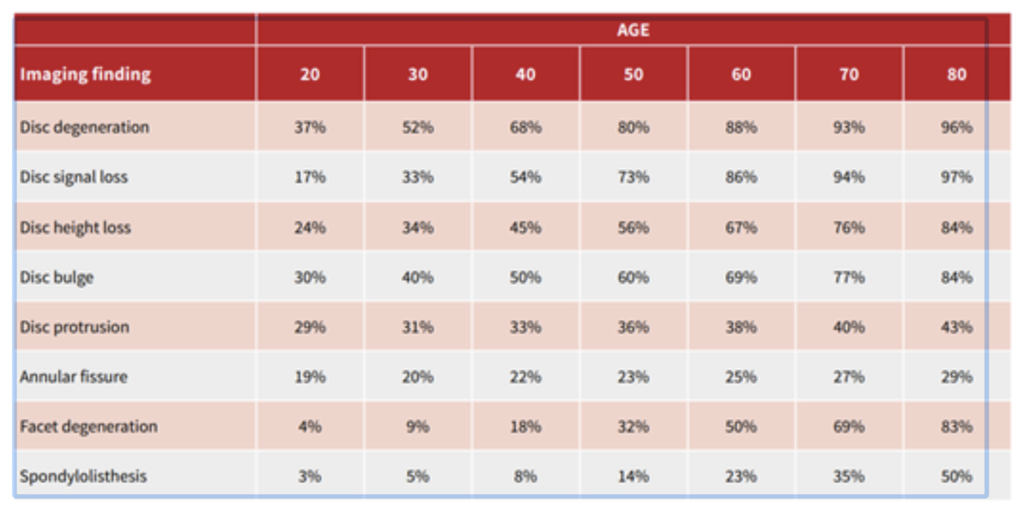
Imaging can identify structural abnormalities like herniated discs, fractures, and degenerative changes. However, these findings do not always correlate with the patient’s symptoms or functional limitations. For instance, many individuals with disc degeneration on imaging—such as older adults—may not experience any pain. Conversely, younger individuals with minimal imaging findings might suffer from significant lumbar pain. Studies have shown that by the age of 20, 37% of people show disc degeneration on imaging, and this prevalence increases with age, reaching 80% by the age of 50.
See table:
Individualised Treatment Plans
Physiotherapists take all available information—imaging findings, clinical assessments, and patient history—to create an individualised treatment plan. This holistic approach ensures that treatment is tailored to the unique needs and conditions of each patient. By considering the complete clinical picture, physiotherapists can focus on addressing the underlying causes of pain and dysfunction, rather than solely treating the imaging abnormalities.
Conclusion
In summary, while imaging findings are a valuable component of the diagnostic process, they are just one piece of the puzzle. A holistic approach that combines imaging with clinical assessment and patient history is essential for effective treatment and management of lumbar spine conditions.
Maintaining Weight Loss: Building Long-Term Habits
By Maddy Bedding, Accredited Practicing Dietitian
Reaching your weight loss goal is a big achievement, but maintaining it comes down to everyday habits. Having a set routine with groceries and meal planning is one of the best ways to stay on track. Planning ahead means you’ve always got nutritious options on hand and less need for last-minute choices.
Exercise also plays a role, but it works best when it’s something you enjoy. Whether it’s walking, the gym, or a team sport, finding movement you look forward to makes it easier to stay consistent.
It’s also important to have a way of keeping tabs on your progress – this might be noticing how clothes fit, energy levels, or simply checking in regularly with yourself. Catching small changes early helps prevent weight from gradually creeping back on.
Having staple meals for breakfast and snacks is another great strategy. Quick, balanced options you enjoy make healthy eating part of your routine, not a daily decision. Being mindful of portion sizes and limiting alcohol also makes a difference over time.
And if you do notice things starting to shift, don’t resort to crash diets. Instead, return to the strategies that worked for you the first time -planning, balance, and consistency.
Remedial Massage: A Natural Solution for Physical Discomfort
By Maddy Bedding, Accredited Practicing Dietitian
Unlike general relaxation massage, Remedial Massage is specifically tailored to your individual needs, making it a highly effective approach for managing a wide range of physical discomforts.
Below of some of the benefits of Remedial Massage:
Pain Relief
One of the most well-known benefits of Remedial Massage is its ability to reduce pain. Whether you’re dealing with muscle tension, joint stiffness, or soft tissue discomfort, remedial techniques target specific areas to relieve pain. Therapists work to loosen tight muscles, increase flexibility, and restore movement, all of which support the body’s natural healing process.
Stress Reduction
Remedial Massage also promotes mental well-being by helping to reduce stress and anxiety. Through improved circulation and deep relaxation, it can calm the nervous system and support the body’s natural stress response. This is especially beneficial for individuals living with chronic stress or fatigue.
Improved Posture
Spending long hours at a desk or sitting in one position can lead to postural imbalances, resulting in discomfort or pain in the back, shoulders, and neck. Remedial Massage helps address these imbalances by releasing tension and re-aligning muscle patterns, ultimately improving posture and overall mobility.
Enhanced Athletic Performance
For athletes or active individuals, Remedial Massage can support performance by increasing blood flow, improving flexibility, and speeding up recovery. It also helps prevent injuries and maintain optimal muscle condition.
Remedial Massage is a safe, natural, and effective way to manage pain, stress, and physical imbalances. Whether you’re dealing with chronic pain, poor posture, or everyday tension, a qualified remedial therapist can help guide you toward lasting relief and improved well-being. Book your session today and feel the difference
